Skip to content
A Complete Guide to Textured Concrete Finishes for UK Properties in 2026
- by Scott Patterned Concrete
Choosing between a stunning aesthetic and a safe, practical surface shouldn't be a compromise any property owner has to make. For many, the worry that a stylish driveway will turn into a skating rink the moment the British weather turns is a genuine concern, often leading people to settle for "boring" or industrial-looking alternatives. At Scott Patterned Concrete, we've spent over 35 years proving that textured concrete finishes can be both exceptionally beautiful and incredibly reliable underfoot.
You likely already recognise that a driveway or patio is a significant investment, and you're right to expect a surface that stays weed-free and looks pristine for decades without constant scrubbing. This guide will help you discover how modern installation techniques can transform your external spaces into high-end features that add real value to your property. We'll walk you through the most durable options for 2026, from the natural appeal of Stonecrete to slip-resistant imprinted designs that meet strict PTV safety standards. By the end, you'll have the expert knowledge needed to select a finish that perfectly balances sophisticated style with the rugged durability required for the UK climate.
Key Takeaways
- Understand how textured concrete finishes provide essential slip resistance and aesthetic appeal, ensuring your external surfaces remain safe whilst looking professional.
- Explore the versatile range of 2026 decorative options, such as Stonecrete and printed designs, which replicate premium stone without the hassle of weeds.
- Learn how to interpret Pendulum Test Values (PTV) to ensure your project meets current UK safety standards for high-traffic or public areas.
- Discover how to match specific textures to your property's character, from traditional cobbles for heritage sites to contemporary finishes for commercial developments.
- Gain insights into the master craftsman’s installation process, focusing on the critical curing techniques that guarantee long-term durability and surface integrity.
What are Textured Concrete Finishes and Why Do They Matter?
Textured concrete finishes represent the deliberate manipulation of a concrete surface whilst the material is still in its plastic, or wet, state. Instead of leaving a smooth, flat finish that can look stark and uninviting, a master craftsman uses specialised tools and techniques to create a profile that serves three vital purposes: safety through slip resistance, visual appeal, and the management of light reflectivity. In the past, concrete was often viewed as a purely functional, industrial material. Today, it has evolved into a high-end architectural choice that can replicate the look of natural stone or slate whilst offering far superior durability for the UK's unpredictable weather.
For residential and commercial properties in areas like Stockton-on-Tees, Middlesbrough, or County Durham, plain concrete is rarely the preferred choice anymore. It tends to look industrial and, more importantly, it becomes notoriously slippery when wet. By introducing texture, we transform a simple slab into a sophisticated feature that complements the home's character. This shift from utility to design means your driveway or public footpath isn't just a place to park or walk; it's an integrated part of the property's aesthetic that adds genuine market value.
The Science of Concrete Surface Manipulation
Timing is the most critical element in our craft. There is a precise 'window of workability' where the concrete is firm enough to hold a shape but soft enough to be imprinted or brushed. If we wait too long, the surface becomes brittle; too soon, and the detail simply collapses. We often utilise surface retarders, which are specialised chemical agents that slow down the setting of the top layer. This allows us to carefully wash away the very top skin to expose the beautiful aggregates beneath without compromising the structural integrity of the main slab. The surface paste is the thin layer of cement and fine sand that rises to the top during the floating process, providing the essential medium for retaining fine textures and imprints.
Texture vs. Pattern: Clearing Up the Confusion
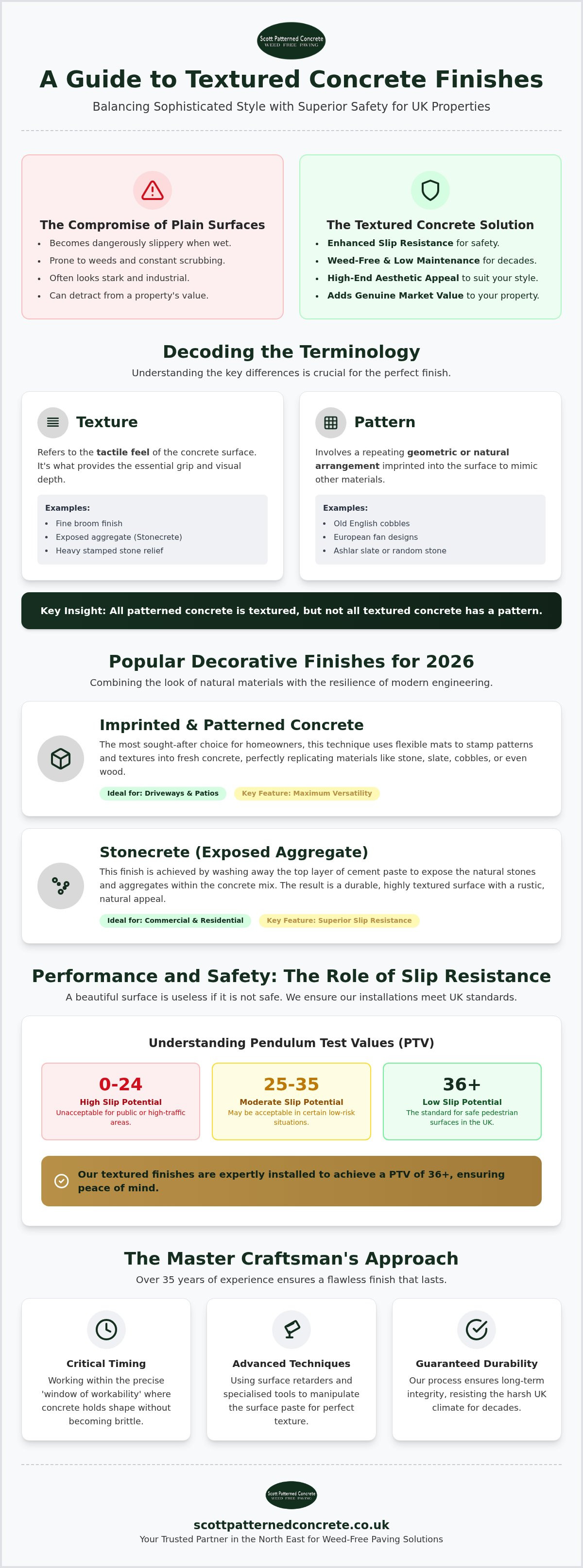
It's a common mistake to use the terms 'texture' and 'pattern' interchangeably. Whilst all patterned concrete is inherently textured, the reverse isn't always true. Texture refers to the tactile feel of the surface, ranging from micro-textures like a fine broom finish to macro-textures found in heavy stamped stone. Various decorative concrete techniques allow us to achieve these looks. Patterns involve geometric or natural arrangements, such as the look of old English cobbles or European fans. Choosing the right profile is about more than just aesthetics; it's about ensuring the surface is fit for its environment, whether it's a private patio in Yarm or a busy public space in Newcastle. This careful selection ensures that your textured concrete finishes provide the perfect balance of grip and grandeur.
Popular Decorative Concrete Finishes for 2026
The evolution of textured concrete finishes in 2026 is driven by a demand for surfaces that look like expensive natural stone but perform with the resilience of modern engineering. Across the North East, from the historic character of Yarm to the sleek commercial developments in Sunderland and Newcastle, we see a clear preference for finishes that respect local architectural heritage. Choosing a finish isn't just about picking a colour from a catalogue; it's about understanding how light hits the surface and how much physical grip is required for the specific environment.
For large-scale commercial projects in Darlington or Hartlepool, we often recommend textures that provide high visibility and safety without becoming visually overwhelming over vast spans. Residential driveways, however, allow for finer detail and deeper textures that mimic traditional masonry. To ensure every project meets the highest safety benchmarks, we adhere strictly to UK slip resistance standards, providing peace of mind for both public footpaths and private family homes. Our 35 years of experience allows us to guide you toward a finish that balances these technical requirements with your personal style.
Imprinted and Patterned Concrete
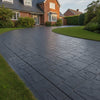
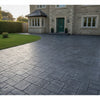
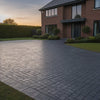
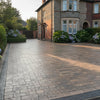
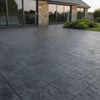
This remains our most sought-after request amongst UK homeowners. By using precision mats, we can replicate the intricate textures of slate, old English cobbles, or York stone with remarkable accuracy. The primary advantage is the continuous slab construction. Unlike individual blocks, there are no gaps for weeds to take root and no units to shift or sink over time. If you're looking for design inspiration for your property, our printed concrete guide showcases the incredible breadth of styles available today.
Stonecrete and Exposed Aggregate
Stonecrete is our premium offering for those who desire the natural look of gravel without the constant maintenance of raking stones back into place or clearing them from your lawn. By carefully exposing the internal aggregate, we create a bespoke visual texture that is both sophisticated and incredibly hard-wearing. You can choose from various stone sizes and colours to perfectly match your property's exterior palette. For a deeper dive into this specific finish, see our Exposed Aggregate Concrete guide.
Broom, Float, and Salt Finishes
Not every project requires elaborate patterns to be effective. A broom finish provides a clean, linear texture that is the industry standard for non-slip utility on steep driveways or commercial ramps in Stockton-on-Tees and Middlesbrough. For a more decorative but subtle look, salt finishes create a beautiful weathered, pitted effect reminiscent of Mediterranean courtyards. Modern minimalist spaces often benefit from varied trowel finishes, which offer different levels of smoothness whilst maintaining enough grip to be safe in wet weather. If you're unsure which texture suits your specific site, we're always happy to provide expert advice on the best finish for your project.
Performance and Safety: The Role of Slip Resistance
In the UK, we don't just design for the occasional summer sun; we design for the drizzle, the downpours, and the winter frosts. This makes slip resistance the absolute priority for any external surface. When we specify textured concrete finishes for a client in Darlington or Sunderland, we aren't just looking at the pattern. We're looking at the Pendulum Test Value (PTV). This is the industry standard for measuring friction. To ensure a surface is classified as having a low slip potential, it must achieve a PTV of 36 or higher in wet conditions. Achieving this requires a deep understanding of how different textures interact with moisture.
For projects where a slightly smoother aesthetic is desired, we don't leave safety to chance. We often incorporate slip-resistant additives into the final sealant. Products like "shark grip", a micronised polymer, or fine kiln-dried sand can be suspended within the sealer to provide a subtle, sandpaper-like grip without altering the visual beauty of the design. This ensures that even the most elegant slip resistant patio surfaces remain safe for grandchildren or elderly relatives during a typical British autumn.
Commercial clients face even stricter requirements. Under the Health and Safety at Work Act, businesses have a legal duty to ensure public walkways are safe. This means adhering to specific British and European standards for floor safety. A failure to provide adequate grip can lead to costly liability claims. Our 35 years of experience in the North East has taught us exactly which profiles provide the best long-term safety for retail parks, schools, and industrial premises.
Textured Finishes for Wet Climates
Stonecrete, or exposed aggregate, is perhaps the ultimate solution for the damp North East climate. By revealing the natural stone within the slab, we create a surface with thousands of tiny peaks that provide exceptional mechanical grip, even in frost. These textured surfaces also help manage water runoff more effectively than flat slabs. The small channels between the stones allow water to disperse, reducing the risk of ponding and the subsequent formation of ice patches in sub-zero temperatures.
Durability Under Heavy Traffic
Texture also plays a vital role in the longevity of a surface. In high-traffic commercial zones, deep textured concrete finishes are far better at hiding the inevitable surface wear and tear that occurs over decades. Whilst a perfectly smooth surface might show every scuff or scratch, a textured profile remains looking pristine. Our imprinted concrete is also sealed with high-quality resins that resist oil stains and tyre marks, making it an ideal choice for busy commercial concrete installations from Stockton to Newcastle.
Selection Guide: Choosing the Right Finish for Your Project
Selecting the ideal surface for your property involves more than just picking a shade from a sample board. To get the best result, we use a straightforward framework based on purpose, budget, aesthetic, and long-term maintenance. After 35 years in the trade, we've seen how the right choice can elevate a property's value, whilst a poor match can feel out of place. For instance, a rustic cobble effect might look stunning against a heritage cottage in Yarm or North Yorkshire, but it could clash with the sharp lines of a modern architectural development in Newcastle.
Comfort and safety also play contrasting roles depending on the specific location. A patio intended for summer entertaining needs to be "barefoot friendly", meaning the textured concrete finishes shouldn't be overly aggressive or sharp underfoot. Conversely, a sloped driveway in a frost-prone area of County Durham or Darlington requires a high-grip profile to ensure vehicles don't lose traction during the winter months. Balancing these functional needs with your desired look is where our expertise as master craftsmen becomes invaluable, ensuring your investment stands the test of time.
Residential Applications: Patios and Driveways
For family gardens, we prioritise finishes that are durable enough for children's play equipment but smooth enough to prevent grazed knees. Our Stonecrete and imprinted designs are popular because they offer a flat, trip-free surface that remains weed-free for years, saving you hours of back-breaking maintenance. For concrete driveways, the texture must be robust enough to withstand the weight of multiple vehicles. We ensure the depth of the imprint is perfectly calibrated so the pattern doesn't wear down or become polished under heavy tyre traffic over the decades.
Commercial and Public Sector Requirements
In the commercial sector, developers and local authorities often favour Stonecrete for public realms due to its immense durability and high-end finish. Whether we're working on schools, retail parks, or hospitality venues, the priority is often consistency across vast areas. Achieving a uniform texture across several hectares requires specialised large-scale pouring techniques and a disciplined approach to timing. Our team is experienced in managing these complex commercial concrete services, ensuring every square metre provides the same level of safety and visual appeal for public use.
Installation and Longevity: The Master Craftsman's Approach
Achieving uniformity across a large driveway in Stockton-on-Tees or a commercial courtyard in Middlesbrough isn't just about the tools; it's about the hands that hold them. Professional installation is critical because textured concrete finishes require a consistent touch to ensure the depth of the imprint or the density of the exposed aggregate remains even across the entire slab. At Scott Patterned Concrete, our 35 years of experience serves as your guarantee of quality. We understand the local geology and weather patterns of the North East, allowing us to manage the concrete's behaviour from the moment it leaves the mixer to the final application of the sealant.
The curing process is perhaps the most misunderstood stage of any project. It's during this time that the concrete gains its structural strength and locks in the textured detail. If the surface dries too quickly, it can lead to "dusting", a common failure where the top layer becomes weak and powdery. We use controlled curing methods to prevent this, ensuring the surface remains hard-wearing and vibrant. Once cured, we apply high-grade sealants that act as a barrier against UV fading and the aggressive freeze-thaw cycles common in areas like County Durham and North Yorkshire. This protection is what keeps the texture crisp and the colours deep for decades.
The Sealing Cycle for Textured Surfaces
To maintain the integrity of your surface, a regular sealing cycle is essential. Generally, imprinted concrete should be resealed every three to five years, whilst Stonecrete (exposed aggregate) can often go slightly longer depending on the level of foot or vehicle traffic. The choice of sealant also impacts the final look. A gloss sealant can enhance the perceived depth of the texture, making colours pop, whereas a matte finish provides a more understated, natural appearance. For a detailed breakdown on keeping your surface in top condition, read our imprinted concrete maintenance tips.
Protecting Your Investment
Whilst our textured concrete finishes are designed to be low maintenance and weed-free, they aren't "zero maintenance". In the damp climate of Sunderland or Newcastle, moss and algae can occasionally take hold in the deeper crevices of a pattern if the surface isn't kept clean. A simple regular sweep or a light power wash with a mild detergent is usually all that's required to prevent debris from filling the texture voids. By following these basic steps, you ensure that your driveway, patio, or commercial space remains a high-end asset that continues to add value to your property.
If you're ready to transform your property with a surface that balances safety, style, and durability, we're here to help. Contact Scott Patterned Concrete for a free, no-obligation quotation and let our family-run team bring 35 years of expertise to your next project.
Transform Your External Spaces with Expertly Crafted Concrete
Investing in a new driveway, patio, or commercial surface is a decision that impacts your property's value and safety for decades. Selecting the right textured concrete finishes ensures you don't have to choose between a high-end aesthetic and practical performance. By balancing the technical requirements of slip resistance with a design that complements your property's character, you create a durable, weed-free environment that stands up to the unpredictable British weather.
At Scott Patterned Concrete, we bring over 35 years of specialist experience to every project we undertake. As a family-run business, we pride ourselves on personal accountability and a commitment to the finer details of craftsmanship. Whether you're a homeowner in the North East or a developer managing a national commercial portfolio, our expertise ensures your project is in safe, capable hands. We're ready to help you navigate the design options and technical standards to achieve a result that combines lasting beauty with total peace of mind.
We look forward to discussing your vision and helping you create a surface that truly enhances your property for years to come.
Frequently Asked Questions
Are textured concrete finishes more expensive than plain concrete?
Yes, they usually involve a higher initial investment than plain concrete because they require specialised tools, pigments, and a greater degree of manual craftsmanship. However, the long-term value is significantly higher. Plain concrete often lacks the kerb appeal and slip resistance that textured concrete finishes provide, meaning you're investing in both the safety and the market value of your property from day one.
Can you add texture to an existing concrete driveway or patio?
True texturing must be performed whilst the concrete is still in its plastic state during the initial pour. Whilst there are thin-set overlay products on the market, they don't offer the same structural permanence as a full-depth slab. If your existing surface is failing or lacks character, we typically recommend a full replacement to ensure the new texture is correctly integrated and capable of withstanding heavy vehicle traffic.
Is stamped concrete slippery when it rains in the UK?
Stamped concrete isn't inherently slippery if it's installed to correct British Standards. We achieve safety by using specific mat depths and incorporating slip-resistant polymer additives into the final sealant. These measures ensure the surface maintains a high Pendulum Test Value (PTV), making it safe for pedestrians and vehicles even during the frequent wet weather we experience across the North East.
Which concrete finish is the easiest to keep clean?
Imprinted patterned concrete is widely considered the easiest finish to maintain because it creates a continuous, non-porous surface. Unlike block paving or gravel, there are no joints where weeds can take root. A simple sweep and an occasional power wash are usually enough to keep the surface pristine. Because it's sealed, oil spills and dirt don't penetrate the material, preventing permanent staining.
How long do decorative textured finishes last before they need repair?
A professionally installed decorative finish can easily last 20 to 30 years before requiring any significant repair. The key to this longevity is the quality of the initial pour and a consistent resealing schedule every few years. Our 35 years of experience in the industry has shown that well-maintained concrete remains structurally sound and visually striking long after other materials like tarmac or resin have begun to fail.
What is the best concrete texture for a steep driveway?
A broom finish or a heavy-textured "cobble" imprint is usually the best choice for steep inclines. These profiles provide the maximum mechanical grip for car tyres in wet or icy conditions. For particularly challenging slopes in areas like County Durham, we can further enhance the traction by increasing the aggregate exposure or adding extra grit to the sealant, ensuring the driveway remains functional and safe year-round.
Does the colour of the concrete affect the visibility of the texture?
Yes, colour choice plays a significant role in how the texture is perceived. We often use a two-tone process where a darker release agent settles into the deeper parts of the imprint. This creates shadows and highlights that make the textured concrete finishes look more three-dimensional and realistic. Lighter, more uniform colours tend to soften the visual impact, whilst darker, antiqued shades make every detail stand out.
Is Stonecrete (exposed aggregate) suitable for commercial car parks?
Stonecrete is an exceptional choice for commercial car parks and public realms due to its extreme durability and natural slip resistance. It handles the heavy point loading of turning vehicles without scuffing or wearing down. Many developers in Stockton-on-Tees and Middlesbrough favour this finish because it combines a premium, architectural look with a rugged surface that requires very little maintenance in high-traffic environments.