Skip to content
Hardwearing Patio Materials: A 2026 Guide to Durable Outdoor Flooring
- by Scott Patterned Concrete
What if your patio could look exactly as it does today for the next twenty years, regardless of how many frosts or storms hit the UK? Most people expect their paving to last, but they quickly find themselves battling slippery algae, shifting slabs, and the relentless growth of weeds through every joint. It's a frustrating cycle that drains both your time and your maintenance budget. We believe that choosing the right hardwearing patio materials shouldn't be a gamble, but a calculated investment in your property's long-term value and your own peace of mind.
In this 2026 guide, we'll explore the most resilient outdoor flooring options designed to survive the British elements whilst remaining effortlessly beautiful. You'll discover how monolithic surfaces and advanced aggregates can eliminate the traditional weaknesses of paving, ensuring your space stays level and weed-free for decades. We'll provide a clear comparison of the top-performing materials, from specialist Stonecrete to patterned concrete, so you can make an informed decision for your home or commercial project. By the end, you'll have a blueprint for a durable, high-quality finish that requires almost zero upkeep.
Key Takeaways
- Learn why monolithic concrete surfaces provide a superior structural advantage by preventing the sinking and shifting common with individual paving units.
- Discover how to select the most hardwearing patio materials for the UK climate by prioritising high compressive strength and frost resistance.
- Understand the critical role of professional drainage and correctly placed expansion joints in protecting your investment from thermal movement and water degradation.
- Compare the long-term maintenance requirements of porcelain and natural stone against the weed-free, high-performance nature of decorative concrete.
- Explore how Stonecrete and patterned concrete offer a resilient, low-maintenance solution that maintains its structural integrity and beauty for over 20 years.
Defining Hardwearing Patio Materials for the UK Climate
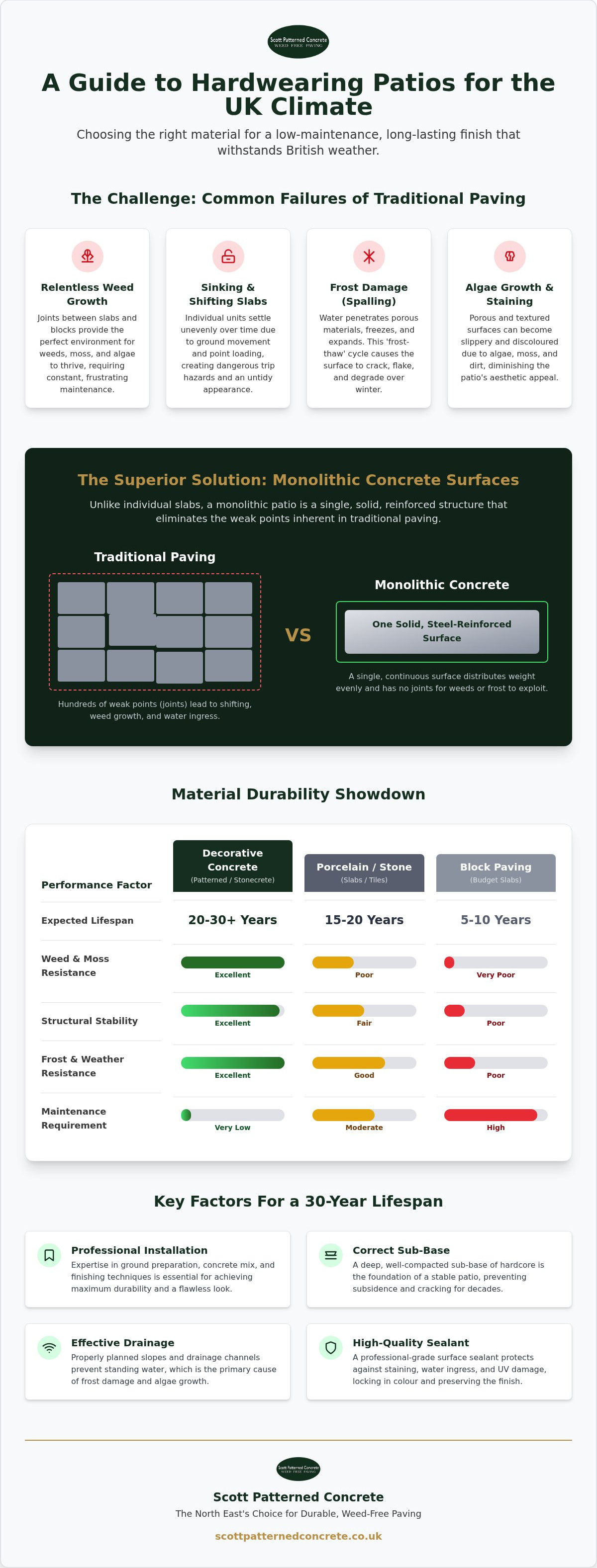
When we talk about hardwearing patio materials, we aren't just discussing a surface that looks good for a summer or two. To a professional installer, "hardwearing" is a technical trifecta: high compressive strength, exceptional frost resistance, and a surface abrasion level that can withstand decades of foot traffic. The UK climate is notoriously unforgiving, specifically because of our high annual rainfall and frequent frost-thaw cycles. These conditions act as a stress test for any outdoor flooring, often revealing the difference between a budget solution and a long-term investment. Whilst a standard slab might offer decorative appeal, it often lacks the structural integrity required to survive thirty years of British winters. Understanding these metrics is the first step towards a patio that adds genuine value to your property.
Service life is a term we use to describe the duration a material remains functional and aesthetically pleasing before requiring major repair or replacement. A budget-friendly DIY slab might last five to ten years before the joints fail or the surface degrades. In contrast, premium options like concrete patios are engineered for a 30-year lifespan, providing a far better return on investment over time. In the context of various paving materials, a surface is only as strong as its weakest point, which is why structural integrity must always be prioritised alongside visual design.
The Role of Frost-Thaw Resistance
In our experience, the biggest threat to longevity is water ingress. When moisture penetrates porous stones, it freezes and expands during winter, leading to a process called "spalling" where the surface begins to flake or crack. Choosing low-porosity hardwearing patio materials, such as professionally installed concrete, significantly reduces this risk. By utilising high-quality surface sealants, we create a barrier that keeps water out, ensuring the finish remains intact and the structural core stays protected from the elements. This is particularly vital in damp environments where standing water is common.
Load-Bearing Capacity and Usage
There's a vast difference between a quiet domestic garden and a high-traffic commercial courtyard. Durability depends heavily on material thickness and the meticulous preparation of the sub-base. For residential patios, compressive strength refers to the material's capacity to support the weight of garden furniture, foot traffic, and occasional heavy machinery without cracking or deforming. In commercial settings, we often specify thicker pours and reinforced aggregates to handle the increased demand. A well-designed installation ensures that weight is distributed evenly, preventing the individual units from shifting or sinking over time.
The Structural Advantage of Monolithic Concrete Surfaces
In the world of landscaping, "monolithic" refers to a surface created from a single, continuous pour of material. Unlike traditional patios composed of hundreds of individual units, a monolithic slab functions as one cohesive structure. This design provides a significant advantage when selecting hardwearing patio materials, as it allows the weight of furniture, vehicles, or foot traffic to be distributed across the entire surface area. By spreading the load, the risk of localised pressure points is eliminated, which is the primary reason why individual slabs often crack or tilt over time. Modern concrete installations further enhance this durability by incorporating polypropylene fibres and steel mesh reinforcement, creating a high-tensile matrix that resists cracking far better than plain stone.
Comparing patio materials often reveals that whilst slabs are popular, they rely heavily on the stability of the ground beneath each specific piece. A monolithic pour acts as its own foundation, bridging minor soft spots in the sub-grade that would otherwise cause a single paving stone to sink. This structural reliability is precisely why professional commercial concrete contractors prioritise poured surfaces for large-scale projects where failure isn't an option. It's a method that offers peace of mind, knowing the ground won't shift under your feet as the years pass.
Eliminating Subsidence and Shifting
Traditional sand-set paving requires a meticulously compacted sub-base, yet even the best preparation can't always prevent individual units from shifting during heavy rain or seasonal ground movement. A solid concrete slab resists these lateral forces. Because the material is bonded together as one unit, it doesn't "float" on a sand bed. It remains locked in place, providing a level of permanence that individual blocks simply cannot match. If you're concerned about the long-term stability of your garden, you can speak with our team for advice on structural specifications tailored to your site.
A Weed-Free Outdoor Living Space
The most common complaint with traditional patios is the constant battle against moss and weeds. These intruders don't grow through the stones themselves; they take root in the mortar joints as the material degrades over time. By choosing a monolithic surface, you eliminate these joints entirely. There's no soil or sand exposed for seeds to find purchase, meaning your weekend plans won't involve kneeling with a weeding tool or applying toxic sprays. This inherent resistance is a core part of our imprinted concrete maintenance tips, as it reduces the need for frequent re-pointing. You're left with a clean, low-maintenance space that retains its beauty with minimal effort.
Comparing Durability: Porcelain, Natural Stone, and Decorative Concrete
Choosing between hardwearing patio materials often feels like a balancing act between aesthetics and endurance. Porcelain has surged in popularity due to its exceptional scratch resistance and modern, clean lines. However, porcelain is a brittle material that relies entirely on a perfect sub-base. If the MOT Type 1 foundation isn't flawlessly compacted, or if a slurry primer is omitted during installation, these tiles are prone to debonding and cracking under seasonal temperature shifts. We've seen many porcelain projects fail within five years simply because the rigid tiles couldn't handle the minor ground movements that are common across the UK.
Over a 20-year lifespan, the "total cost of ownership" varies wildly between these materials. Whilst natural stone might have a lower initial material cost, the cumulative expense of specialised cleaners, sealants, and professional re-pointing often makes it the most expensive option in the long run. Decorative concrete, by contrast, offers the strength of an industrial floor with the refined look of high-end stone, providing a "fit and forget" solution that maintains its structural integrity for decades with minimal financial output.
Porcelain vs. Concrete Patios
The primary concern for many homeowners is safety underfoot. Porcelain is often sold with an R11 slip rating, which is excellent, but this grip can diminish if the surface isn't kept meticulously clean of biofilms. In comparison, textured concrete finishes provide a permanent, physical profile that offers superior traction even in the wettest British weather. The monolithic nature of concrete allows for bespoke concrete patio designs that don't rely on the specialised adhesives and primers required to stop porcelain tiles from lifting. Concrete's versatility means it can be moulded to any shape, creating a seamless transition from your home to your garden.
Natural Stone Durability Realities
Natural stones like Indian Sandstone and Limestone are undeniably beautiful, but they come with inherent durability challenges. These materials are highly porous, acting like a sponge for moisture, which leads to the rapid growth of black spot algae and lichen. Limestone is particularly vulnerable to acid rain, which can etch the surface and cause the stone to delaminate or lose its colour over time. We also frequently see "bleeding" in sandstone, where iron minerals within the stone oxidise and create permanent rust-coloured stains. Colour-hardened concrete avoids these issues by using UV-stable pigments and dense, low-porosity mixes that keep the finish vibrant and resistant to chemical weathering for the long term.
Key Factors that Influence Long-Term Patio Performance
A patio's lifespan is determined long before the final surface is laid. Even the most expensive hardwearing patio materials will fail if the underlying infrastructure is neglected. The foundation of every durable installation is the sub-base, typically consisting of 100mm to 150mm of compacted Type 1 MOT stone. This provides a stable, non-yielding platform that prevents the surface from cracking or shifting under load. For larger concrete areas, we also integrate expansion joints. These are strategic cuts or inserts that allow the material to expand and contract with temperature changes, effectively managing thermal movement so the slab doesn't develop unsightly stress fractures over time.
Effective Drainage and Fall
Water is the primary catalyst for surface degradation in the UK. Without a professional drainage strategy, standing water can penetrate the surface, leading to frost damage or the persistent growth of slippery algae. We design every project with a precise fall, usually between 1:60 and 1:80, ensuring that rainwater is directed away from the property and towards a suitable exit point. This often involves the integration of Aco drains or soakaways, which are essential for managing heavy downpours. By keeping the surface dry, you significantly reduce the "damp spots" where moss thrives, keeping your outdoor space cleaner and safer for longer.
The Science of Surface Sealants
Surface sealants act as a vital protective skin for your patio. They serve multiple purposes: they prevent oil and grease from staining the surface, shield the pigments from UV-driven fading, and "lock in" the final colour. There are three main types of sealers used in the industry:
- Acrylic sealers: Popular for their "wet look" finish and ease of application.
- Polyurethane sealers: Offer a tougher, more chemical-resistant barrier.
- Solvent-based sealers: Provide deep penetration and long-lasting protection against the elements.
Beyond protection, these sealants make the surface non-porous, meaning dirt can be simply washed away rather than becoming embedded in the material. To maintain maximum longevity and keep the surface looking brand new, we recommend a professional re-seal every three to five years depending on the level of foot traffic and exposure to the elements.
Request a professional site survey for your project
Why Patterned Concrete and Stonecrete are the Ultimate Hardwearing Choices
When evaluating the most hardwearing patio materials available in 2026, two options consistently stand out for their blend of structural resilience and aesthetic versatility: Stonecrete and printed concrete. As a family-run specialist with over 35 years of experience, we've seen first-hand how these monolithic surfaces outperform traditional paving in the unpredictable British climate. Whilst individual slabs rely on the integrity of their joints, these systems provide a continuous, reinforced barrier against the elements. The printed concrete process involves more than just stamping a pattern; it utilises a dry-shake colour hardener that is trowelled into the wet surface. This chemically bonds the pigment to the concrete, creating a surface that is significantly harder and more abrasion-resistant than the base material itself.
Customisation is where these materials truly shine. Whether you desire the rustic charm of old English cobblestones or the sleek, contemporary look of a luxury aggregate, the possibilities are virtually limitless. By choosing a single-pour solution, you're not just selecting a style; you're investing in a foundation that won't sink, shift, or invite weeds. This level of permanence is why we recommend these materials for both high-end residential gardens and demanding commercial environments across the UK.
Stonecrete: The Luxury High-Performance Surface
For those seeking a surface that combines the raw strength of concrete with the refined elegance of natural stone, Stonecrete exposed aggregate represents the pinnacle of modern landscaping. Unlike standard smooth finishes, Stonecrete involves the careful removal of the surface laitance to reveal the beautiful natural stones within the mix. This creates a highly textured, slip-resistant profile that is ideal for high-traffic concrete paths and pool surrounds. It offers a sophisticated aesthetic that complements both traditional and contemporary architecture whilst providing a surface that is almost impossible to wear down.
The Scott Patterned Concrete Family Standard
Choosing a specialist for your installation is about more than just the material; it's about the technical precision of the pour. With over three decades of industry experience, our team understands the finer details that prevent common issues like surface crazing or poor drainage. As a family business, we take personal responsibility for every project, ensuring that the craftsmanship meets our exacting standards. We believe that a patio should be a source of pride for decades, not just a few seasons. If you're looking for design inspiration or want to see the results of our master craftsmanship, we encourage you to browse our concrete patios gallery to see the transformations we've achieved for our clients.
Investing in a Lifetime of Outdoor Quality
Selecting the right hardwearing patio materials is a significant investment that should pay dividends for decades to come. We've explored how monolithic surfaces fundamentally eliminate the structural weaknesses of traditional paving, ensuring your garden remains weed-free and perfectly level regardless of the British weather. By prioritising professional drainage and high-performance finishes like Stonecrete or printed concrete, you're choosing a solution that balances industrial strength with refined, luxury aesthetics.
As a family-run business with over 35 years of industry experience, we understand that every project is deeply personal. We've built our reputation on master craftsmanship and straight-talking honesty, specialising in decorative concrete solutions that truly stand the test of time. Whether you're a homeowner looking for a low-maintenance retreat or a commercial developer requiring a high-traffic surface, our team is here to guide you through every technical detail. Your outdoor space deserves a foundation that is as reliable as it is beautiful, and we take personal responsibility for ensuring your vision is realised with precision.
We look forward to helping you create a durable, high-value space that you can take pride in for many years to come.
Frequently Asked Questions
What is the most hardwearing material for a patio in the UK?
Monolithic concrete, specifically Stonecrete and printed concrete, is widely considered the most resilient choice for the UK climate. These hardwearing patio materials offer superior compressive strength and frost resistance compared to individual units. Because the surface is a single, continuous pour, it doesn't suffer from the sinking or shifting common with paving slabs. This structural integrity ensures the patio remains level and functional for decades, even under heavy foot traffic or harsh winter conditions.
Which patio material is easiest to maintain and keep clean?
Printed concrete is the easiest material to maintain because its non-porous, sealed surface prevents dirt from becoming embedded. Unlike traditional paving, there are no mortar joints where weeds can take root, eliminating the need for constant weeding or re-pointing. A simple wash with a garden hose is usually enough to keep it looking new. To maintain its protective barrier and vibrant colour, we recommend a professional re-seal every three to five years.
Does patterned concrete crack more easily than paving slabs?
Patterned concrete is designed to be more structurally stable than paving slabs, provided it is installed with professional expansion joints. Whilst slabs often tilt or crack due to sub-base movement, a reinforced concrete slab acts as its own foundation. Cracking is effectively managed by strategic joints that allow for thermal expansion and contraction. Our 35 years of experience ensures the pour is engineered to handle ground movement without compromising the surface's visual or structural integrity.
Is porcelain more durable than natural stone for outdoor use?
Porcelain is generally more durable than natural stone regarding scratch resistance and stain prevention due to its extremely low porosity. Natural stones like sandstone or limestone are porous, meaning they absorb moisture and are prone to black spot algae and acid rain damage. However, porcelain is brittle and requires a perfect sub-base to prevent cracking. For a truly robust solution, many homeowners prefer the high-tensile strength of decorative concrete which combines durability with easier installation.
How long should a high-quality concrete patio last?
A high-quality concrete patio, when installed by specialists and maintained correctly, should comfortably last over 25 to 30 years. The longevity of hardwearing patio materials depends heavily on the initial sub-base preparation and the use of high-grade sealants. By protecting the surface from UV rays and moisture ingress, you ensure the structural core remains intact. This long service life makes monolithic concrete one of the most cost-effective investments for any residential or commercial property.
Can I install a hardwearing patio over an existing surface?
We strongly advise against installing a new patio directly over an existing surface, such as old tarmac or paving. A truly hardwearing finish requires a meticulously prepared sub-base of compacted Type 1 MOT to ensure stability. Installing over an old surface often leads to reflective cracking and drainage failures, as the new layer is only as stable as the one beneath it. Starting with a fresh, engineered foundation is essential for achieving a 20-plus year lifespan.
What is the most slip-resistant hardwearing patio material?
Stonecrete exposed aggregate is the most slip-resistant material for outdoor use due to its physically textured surface. By exposing the natural stones within the concrete mix, we create a high-traction finish that remains safe even when wet. This makes it a popular choice for high-traffic paths, pool surrounds, and commercial courtyards. Unlike smooth tiles that rely on chemical coatings for grip, Stonecrete's slip resistance is an inherent part of its physical structure and will not wear away.
How much does a hardwearing patio typically cost per square metre?
The cost of a patio should always be measured by its total cost of ownership rather than just the initial installation price. Whilst budget slabs might seem cheaper upfront, the ongoing costs of weeding, re-pointing, and eventual replacement often make them more expensive over time. A premium, monolithic surface represents a one-time investment that adds significant property value. For an accurate assessment of your specific project, it is best to request a professional site survey and a bespoke quotation.