Skip to content
Expert Imprinted Concrete Maintenance Tips: A Guide to Lasting Durability
- by Scott Patterned Concrete
Did you know that a correctly cared-for driveway can look as striking in its third decade as it did on the day the final sealer was applied? Most homeowners and commercial property managers choose this material for its incredible kerb appeal, yet it's common to feel overwhelmed by conflicting imprinted concrete maintenance tips or worried about vibrant colours fading under the sun. You want a surface that stays pristine without becoming a slippery hazard during a British winter.
We understand that your property is a significant investment that deserves the highest standards of care. In this guide, we'll share the professional secrets we've refined over 35 years as a family-run specialist to ensure your installation remains a standout feature. We'll walk you through a clear care schedule, explain how to navigate the 2025 SUDS drainage standards, and help you decide when a simple DIY wash is enough versus when it's time to call in the master craftsmen for a professional reseal. By the end, you'll have the confidence to keep your concrete looking brand new whilst protecting its long-term durability.
Key Takeaways
- Learn how protecting the surface-hardened wear layer prevents UV damage and keeps your driveway's colours vibrant for decades.
- Discover the master craftsman's approach to routine cleaning, which prioritises gentle washing over aggressive pressure settings to preserve the concrete's finish.
- Master essential imprinted concrete maintenance tips, including the "3 to 5-year rule" for resealing to stop water soaking in and prevent surface whitening.
- Understand why avoiding rock salt and de-icing chemicals is critical for protecting your installation from damage during harsh British winters.
- Identify the clear signs that distinguish simple DIY cleaning from the complex restoration work that requires professional expertise.
The Fundamentals of Imprinted Concrete Longevity
Pattern Imprinted Concrete (PIC) is often misunderstood as a simple decorative surface. In reality, it's a monolithic pour, meaning the entire driveway or patio is a single, continuous slab of high-strength concrete. During the installation process, a specialist colour surface hardener is floated into the wet concrete. This creates a dense, hardened "wear layer" that integrates the pigment directly into the top few millimetres of the slab. It isn't just a coating; it's a structural component designed for permanence.
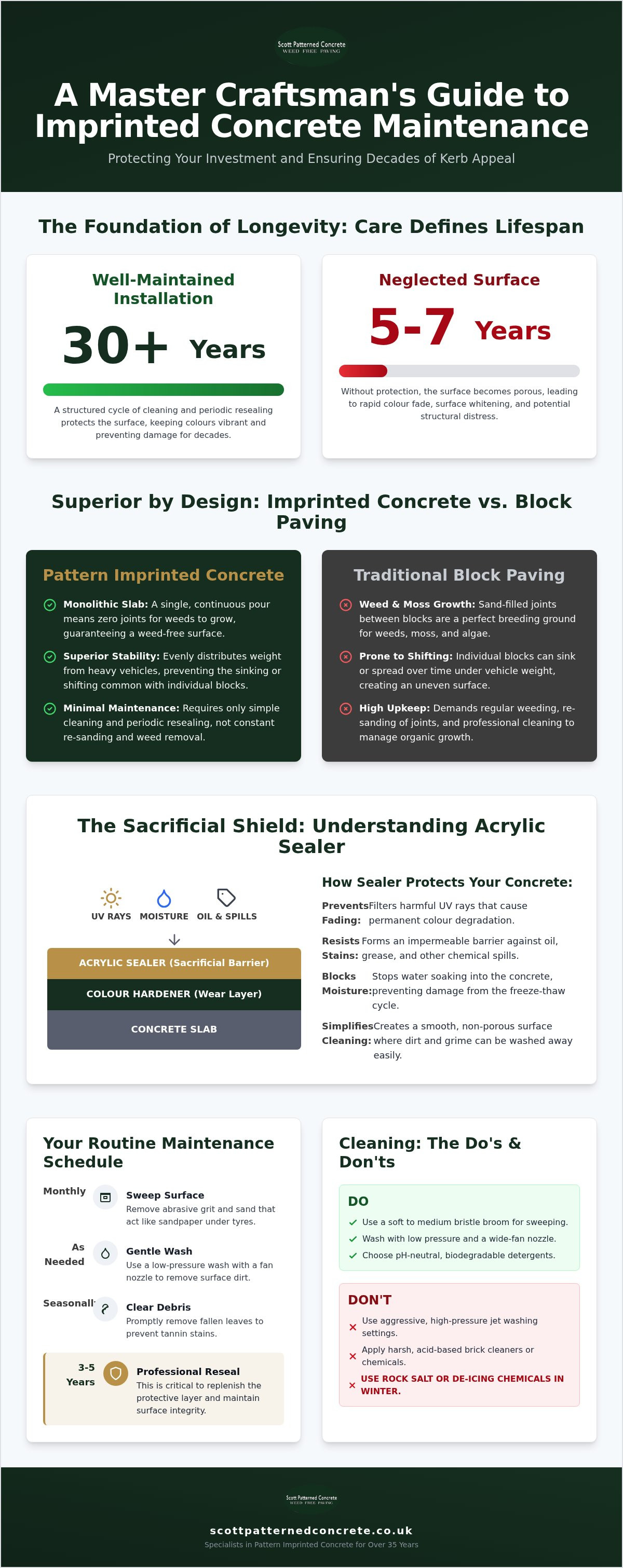
The secret to a surface that looks as impressive in 30 years as it does today lies in protecting this wear layer. Whilst concrete is incredibly durable, it's susceptible to abrasion and environmental stress if left exposed. This is where professional imprinted concrete maintenance tips become invaluable. By following a structured maintenance cycle of regular cleaning, annual inspections, and periodic resealing, you prevent the surface from becoming porous or brittle. A well-maintained installation can easily last three decades, whereas a neglected one may show signs of significant distress within just five to seven years.
Why Decorative Concrete Behaves Differently to Block Paving
One of the primary advantages of a monolithic pour is the total absence of individual joints. In traditional block paving, the gaps between bricks are filled with sand, which inevitably washes away or becomes a breeding ground for organic growth. Because imprinted concrete is a solid slab, there are no structural voids for seeds to take root in. You can explore the technical reasons behind this in our guide to why weeds never grow through imprinted concrete. This continuous structure also provides superior weight distribution, ensuring the surface won't sink or shift under the weight of heavy vehicles, provided the protective sealer remains intact.
The Role of Acrylic Sealers in Surface Protection
An acrylic sealer serves as a sacrificial barrier for your concrete. It's designed to absorb the impact of daily traffic, oil spills, and harsh weather, preventing these elements from reaching the concrete itself. Without this clear shield, the surface is directly exposed to the sun's rays. UV degradation is the chemical breakdown of concrete pigments caused by prolonged exposure to ultraviolet radiation, leading to a permanent loss of colour intensity. A high-quality sealer filters these rays and prevents moisture from soaking into the slab. Think of it as a transparent skin that keeps the colour vibrant whilst making the surface easy to wipe clean of grease and grime.
A Step-by-Step Guide to Cleaning Your Concrete Surface
Maintaining the aesthetic appeal of your driveway starts with a simple, disciplined routine. A monthly sweep is the most effective way to prevent abrasive grit from scratching the protective sealer. If left to accumulate, these tiny particles act like sandpaper under car tyres, gradually wearing away the finish. Beyond grit, organic debris like fallen leaves should be cleared promptly. If left to rot, they can release tannins that leave stubborn, dark stains on the surface.
When washing your driveway, the master craftsman approach is one of restraint. We often see homeowners accidentally damage their surfaces by using industrial-strength pressure settings. To keep your concrete in peak condition, use a low-pressure wash with a wide-fan nozzle. This removes surface dirt without compromising the bond between the sealer and the concrete. If you're unsure about the current state of your surface, you can always request expert advice on maintenance to ensure you're using the right techniques for your specific pattern.
Tools and Materials for Professional Results
For regular maintenance, we recommend a soft-to-medium bristle broom. This effectively clears debris without being so stiff that it scuffs the acrylic barrier. For deeper cleans, biodegradable detergents are the safest choice for both residential gardens and commercial forecourts. These solutions break down grime and traffic film without leaving toxic residues that could harm local wildlife or surrounding flower beds. Always ensure any cleaner you use is pH-neutral to prevent etching the concrete surface.
Removing Stubborn Stains Without Damaging Colour
Stains generally fall into two categories: organic and chemical. Organic growth, like algae or lichen, typically thrives in shaded, damp areas. These are best treated with a dedicated fungicide whilst preserving the underlying pattern. Chemical spills, particularly oil, require immediate attention. Use an absorbent material like cat litter to lift the liquid before it penetrates the sealer. Once the excess is removed, wash the area with a gentle degreaser. Avoid harsh acidic cleaners at all costs; these chemicals can "burn" the pigment in the wear layer, leading to permanent discolouration. Following these imprinted concrete maintenance tips ensures your driveway remains a clean, welcoming entrance to your property.
The Science of Sealing: When and How to Reseal
Resealing is the cornerstone of any long-term care plan. Generally, we recommend following the "3 to 5-year rule" for most installations. High-traffic commercial forecourts might need attention closer to the three-year mark, whilst quiet residential patios often reach five years without issue. You'll know it's time when the surface starts to look "thirsty." If water stops beading on the surface and begins soaking into the slab, the protective barrier has worn thin. Other red flags include "blooming," where trapped moisture creates unsightly white patches, or a noticeable dulling of the original pigment.
Choosing your finish is a matter of both aesthetics and function. A Silk finish provides a high-gloss "wet look" that makes colours pop, making it a favourite for decorative patios. Conversely, a Matt finish offers a more understated, natural appearance that's often preferred for larger driveways. Regardless of the finish, the concrete must be bone-dry before you begin. Sealing over even a hint of moisture is the most common cause of maintenance failure; it traps water inside the slab, leading to delamination and a cloudy finish that's difficult to rectify.
Applying Anti-Slip Additives for Safety
While sealers protect the concrete, they can become slippery when wet. We always recommend incorporating "Rhino grip" or specialist glass beads into the final coat. These micronised additives provide essential traction without altering the visual pattern. For more detail on choosing textures, see our guide on Slip Resistance and Safety for Decorative Surfaces. The key is to mix the additive thoroughly into the sealer before application, ensuring a consistent, safe texture across the entire area.
Professional Sealing Techniques for a Streak-Free Finish
Achieving a professional result requires the right application method. Whilst brushes and rollers work well for smaller areas, we often use specialist sprayers for larger commercial projects to ensure an even distribution. Our "two-coat" philosophy is non-negotiable; a single thick coat often pools in the pattern's recesses, whereas two thin coats create a durable, uniform bond. Timing is equally important. Never apply sealer in the direct heat of the midday sun, as it will dry too quickly and fail to penetrate. Similarly, avoid application if frost is forecast, as low temperatures prevent the chemical bond from forming correctly. These imprinted concrete maintenance tips are what separate a DIY job from a master craftsman's finish.
Seasonal Care and Damage Prevention in the UK
The British climate presents a unique set of challenges for any external surface. We experience damp, freezing winters followed by intense UV exposure during the summer months. These fluctuating conditions can take a toll on your driveway if you aren't prepared. Implementing specific seasonal imprinted concrete maintenance tips is the best way to safeguard your investment against the elements and ensure the surface remains structurally sound for decades.
During the warmer months, high-quality pigments are essential for long-term vibrancy. Our Stonecrete surfaces are engineered with UV-stable colour hardeners that resist the fading typically associated with cheaper, non-specialist materials. By maintaining a fresh coat of sealer as discussed in previous sections, you ensure these pigments remain shielded from the sun's most damaging rays. Preventing physical damage is equally important; avoid parking excessively heavy vehicles or machinery on residential driveways, as these are designed for standard domestic use. Concentrated weight can cause structural stress, especially if the sub-base is softened by extreme seasonal rainfall.
Protecting Concrete During the British Winter
Rock salt and common de-icing chemicals are arguably the greatest threats to your driveway's finish. When salt is applied to ice, it creates a brine that penetrates the concrete's pores. This triggers a chemical reaction that can lead to "spalling," where the top layer of the concrete begins to flake or scale off. Instead of harsh chemicals, we recommend using plain sand for traction. If you must clear snow, always use a plastic shovel. Metal scrapers can easily gouge the acrylic sealer, leaving the underlying colour vulnerable to moisture ingress and chemical attack.
Preventative Drainage and Vegetation Control
Standing water is a primary catalyst for damage during the colder months. During "freeze-thaw" cycles, any water trapped on the surface or in micro-cracks expands as it turns to ice, exerting massive internal pressure on the slab. Ensure your aco-drains and gully grates are clear of leaves and silt to allow for rapid runoff. Managing overhanging vegetation is equally vital. Trees that drop sap or tannin-heavy leaves can leave permanent marks if they aren't cleared promptly. Maintaining a clear perimeter and functional drainage is one of the most effective imprinted concrete maintenance tips for preventing long-term stability issues.
Professional Restoration vs. DIY Maintenance
Deciding when to tackle a project yourself and when to call in the experts is a fundamental part of property care. For the proactive homeowner, routine cleaning and minor top-up sealing are manageable tasks that keep a driveway looking sharp. However, when you're faced with significant colour loss, deep cracks, or surface delamination, these imprinted concrete maintenance tips move from simple chores to specialist restoration work. Attempting complex repairs without the right equipment often leads to a finish that looks patchy or fails within a single season.
Scott Patterned Concrete brings 35 years of industry experience to every restorative project. We've seen many instances where DIY attempts involved applying new sealer over old, peeling layers, which only traps the damage and makes it harder to rectify. Our professional resealing services can restore old imprinted concrete by chemically stripping back failed coatings and reinstating a durable, high-performance wear layer. This process requires a master craftsman's touch to ensure the chemical bond is perfect and the colour is uniform.
Identifying Structural vs. Cosmetic Issues
It's vital to distinguish between a surface hairline crack and structural subsidence. Hairline cracks are often cosmetic and occur naturally as concrete settles; these can be expertly filled and hidden during a professional reseal. If you notice a crack widening significantly or one side of the slab sinking, this suggests a sub-base failure that requires an expert's assessment. Patching colour is equally technical. Matching pigments to a surface that has naturally aged requires an experienced eye to avoid a "leopard-print" effect. Sealing over existing poor-quality or peeling sealer is a common DIY mistake that results in delamination, where the new layer simply flakes off because it couldn't bond with the concrete slab.
The Long-Term ROI of Professional Maintenance
Viewing specialist maintenance as an investment rather than an expense is the key to ensuring your driveway lasts for 30 years or more. A professional service every few years costs a fraction of a full excavation and replacement. For commercial property managers, developers, and public sector organisations, this proactive approach is even more critical. It ensures that large-scale decorative surfaces remain safe and slip-resistant whilst maintaining the high-quality aesthetic that reflects their brand's standards. By partnering with a trusted specialist, you protect your property's value and ensure your concrete remains a long-term asset.
Securing Your Property's Long-Term Aesthetic Appeal
Maintaining your driveway or patio doesn't have to be a daunting task. By following these professional imprinted concrete maintenance tips, you can preserve the structural integrity and vibrant colour of your installation for decades. The secret lies in protecting the sacrificial wear layer through gentle cleaning, avoiding damaging rock salts during the winter, and ensuring a high-quality reseal every three to five years.
At Scott Patterned Concrete, we've spent over 35 years refining our craft as a family-run business. Whether you've chosen our durable Stonecrete aggregate or a classic imprinted finish, we're dedicated to helping you maintain that "just-installed" look. We take personal pride in every project, offering the honest, straight-talking advice you need to make informed decisions about your property’s long-term care.
Your property deserves a surface that stands the test of time. With the right care and a commitment to quality, your concrete will continue to impress visitors and add value to your home or business for many years to come.
Frequently Asked Questions
How often should I clean my imprinted concrete driveway?
You should sweep your driveway at least once a month to remove abrasive grit and organic debris. For a more thorough wash, we recommend a gentle clean with a pH-neutral detergent every six to twelve months. This routine prevents the buildup of traffic film and organic stains, ensuring the surface remains vibrant. Regular sweeping is one of the simplest imprinted concrete maintenance tips to prevent the protective sealer from being scratched by dirt under vehicle tyres.
Can I use a pressure washer on my patterned concrete?
Yes, you can use a pressure washer, but you must use a low-pressure setting and a wide-fan nozzle. Holding the nozzle too close or using a high-pressure "pencil" jet can strip the acrylic sealer or even damage the concrete's wear layer. We advise keeping the nozzle at least 30cm from the surface and moving in steady, even strokes. This removes surface grime whilst protecting the integrity of the decorative pattern.
Is imprinted concrete slippery when wet and how can I fix it?
Sealed concrete can become slippery when wet, particularly if a high-gloss finish is applied without additives. This is easily rectified by incorporating a "Rhino grip" or micronised glass bead additive into the final coat of sealer. These invisible particles provide essential traction for pedestrians and vehicles. If your existing surface is currently a hazard, a professional reseal with these safety additives will significantly improve grip and peace of mind.
What is the best type of sealer for a printed concrete patio?
The best choice is a high-quality, UV-stable acrylic solvent-based sealer designed specifically for decorative concrete. For patios, a "Silk" finish is popular as it enhances the colour depth and provides a slight sheen. If you prefer a more natural, understated look, a "Matt" finish is equally protective. The most important factor is ensuring the sealer is breathable, allowing internal moisture to escape whilst preventing external water and oils from soaking into the slab.
Can I use salt to de-ice my concrete driveway in winter?
No, you should never use rock salt or chemical de-icers on imprinted concrete. These substances trigger a chemical reaction that can cause the surface to scale or "spall," leading to permanent damage. For safety during icy conditions, we recommend using plain sand to provide traction. Sand is non-reactive and won't compromise the sealer or the underlying pigment, making it the safest choice for protecting your installation throughout the British winter.
How do I fix white patches appearing on my sealed concrete?
White patches, often called "blooming," usually occur when moisture is trapped beneath the sealer or when the sealer has been applied to a damp surface. This can often be fixed by a professional using a "solvent wash" to re-emulsify the sealer and allow the moisture to escape. It's a technical process that requires a master craftsman's eye to ensure the finish returns to its original clear and vibrant state without stripping the colour.
Does imprinted concrete require weed killer?
Generally, imprinted concrete doesn't require weed killer because it's a monolithic slab without the open joints found in block paving. Weeds cannot grow through the concrete itself; however, if a layer of dirt accumulates in the pattern's recesses, surface weeds might occasionally take root in that debris. These are easily removed with a simple sweep or a gentle wash. Maintaining the sealer ensures that seeds find it difficult to settle in the first place.
When is the best time of year to reseal my driveway?
The ideal time to reseal is during dry, mild weather, typically between late spring and early autumn. You must avoid days with high humidity, direct midday sun, or any threat of rain. The concrete must be completely dry for at least 24 hours before application to prevent moisture entrapment. Following these imprinted concrete maintenance tips ensures the sealer bonds correctly, providing a durable finish that will withstand the following winter's harsh conditions.