Skip to content
The Ultimate Guide to Slip Resistant Patio Surfaces for UK Homes
- by Scott Patterned Concrete
Why should the British weather force you to choose between a garden that looks like a high-end magazine spread and one that is actually safe for your grandchildren to run on? We understand the anxiety of watching a beautiful investment become a skating rink the moment a light drizzle hits your home in Darlington or Stockton. Many homeowners fear that opting for slip resistant patio surfaces requires settling for a coarse, "sandpaper" texture that compromises the elegance of their outdoor space.
At Scott Patterned Concrete, we've spent more than 35 years demonstrating that uncompromising safety and premium aesthetics can coexist perfectly. This guide will help you navigate the technical side of outdoor flooring, from understanding UK Pendulum Test Values to selecting materials that naturally inhibit slippery algae growth. We'll explore how the right textures and installation techniques can provide peace of mind for your family or customers, ensuring your patio remains a functional, high-end asset regardless of the season.
Key Takeaways
- Understand the UK's Pendulum Test Value (PTV) standards to ensure your outdoor flooring provides a safe, low-risk environment for family or visitors.
- Discover why Stonecrete exposed aggregate is widely regarded as the gold standard for slip resistant patio surfaces because of its durable, integrated texture.
- Learn how professional installation techniques, including correct drainage and sub-base preparation, prevent the standing water that leads to slippery surfaces.
- Identify the maintenance routines, such as professional sealing and algae removal, that are essential for preserving the grip and beauty of your patio over time.
- Compare the safety benefits of different decorative concrete finishes to find a solution that balances premium aesthetics with uncompromising underfoot security.
What Makes a Patio Surface Slip Resistant?
In the world of professional hardscaping, slip resistance is a technical measurement of the friction between a walking surface and a person's foot or shoe. It isn't a vague "feeling" of grip; it's a structural property that we carefully consider during every installation. Many clients ask us for "non-slip" paving, but it's vital to understand that this is often a marketing term rather than a technical reality. We focus on providing high-quality slip resistant patio surfaces that meet specific safety standards, particularly when the unpredictable British weather comes into play. A surface is rated based on how it performs under different conditions, ensuring it provides enough "bite" to prevent a foot from sliding.
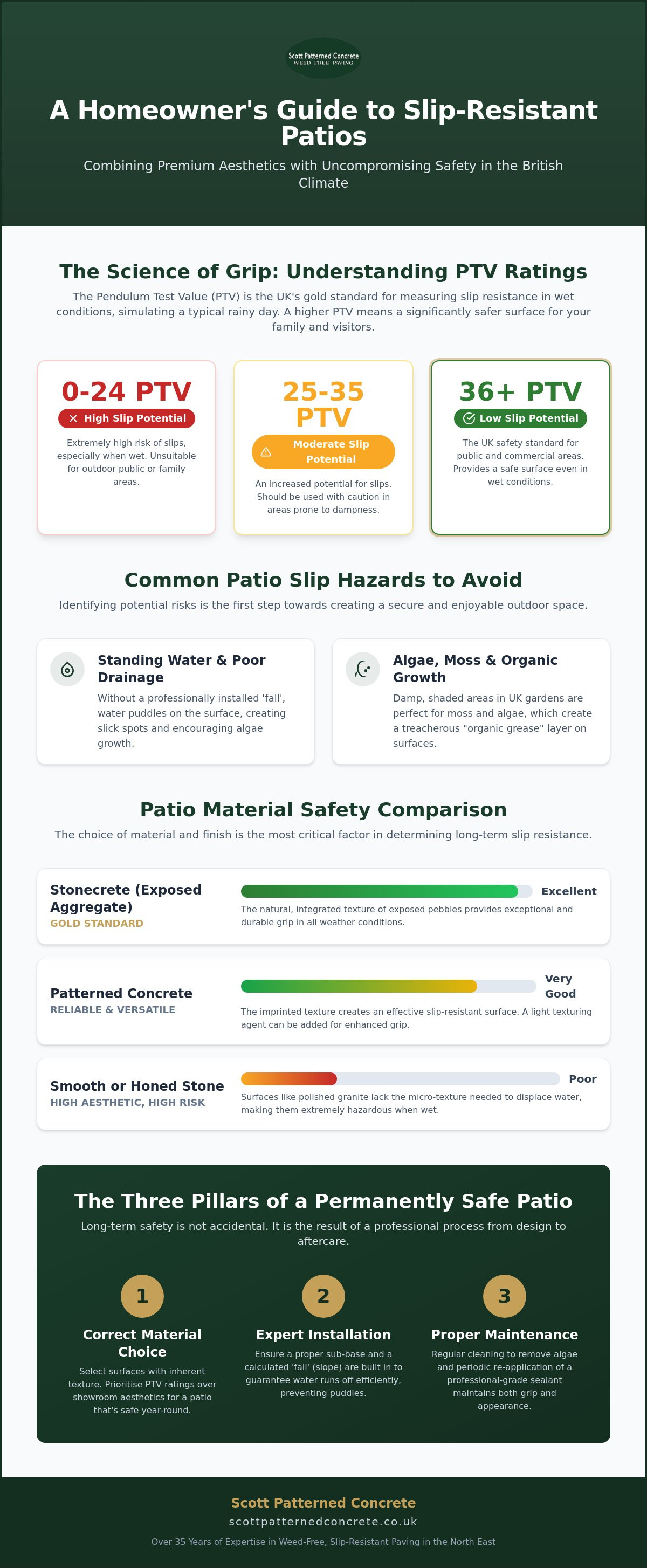
For homeowners across the North East, from Stockton-on-Tees to Sunderland, our damp climate makes this feature non-negotiable. A surface that feels secure in the dry can become a significant liability after a typical coastal drizzle or a frosty morning in County Durham. To understand the technical side of this, many professionals look at The Science of Grip: Understanding PTV and R-Ratings. This data helps us choose materials that maintain their integrity even when wet, shifting the focus from mere aesthetics to long-term household safety.
The Anatomy of a Safe Surface
A safe patio relies on its profile. This isn't just the visible pattern, but the micro-texture that creates an "interlock" with your footwear. This texture works by breaking the surface tension of water, allowing your shoe to make direct contact with the stone or concrete. Porosity also plays a role. While a surface should be sealed to protect it from the elements, it must still allow water to displace rather than forming a thin, lubricated film. Smooth surfaces like polished granite or certain honed stones might look stunning in a showroom, but they are high-risk choices for garden paths because they lack this essential micro-texture.
Common Slip Hazards in UK Gardens
Standing water and poor drainage are the primary culprits for accidents. If a patio isn't installed with the correct "fall" to let water run off, puddles will form, creating slick spots. In the North East, we also deal with biological hazards. Moss, algae, and lichen thrive in our shaded, damp gardens, creating a layer of "organic grease" that can make even the best stone treacherous. Finally, we often see risks in the "Transition Zone." As more homeowners install large bi-fold doors leading to their concrete patios, the move from indoor carpets or wood to an outdoor surface can be jarring. If you step out in socks or smooth-soled slippers, the slip resistance of that first metre of paving becomes your most important safety feature.
The Science of Grip: Understanding PTV and R-Ratings
When we discuss slip resistant patio surfaces with our clients in Stockton-on-Tees or Middlesbrough, we don't just rely on how a material feels to the touch. We look at the data. In the UK, the gold standard for measuring friction is the Pendulum Test Value (PTV). This test is far more relevant to our local climate than the common European "R-ratings" you might see on tile samples. While R-ratings are often calculated on a ramp using oil, the PTV test uses water to simulate the exact conditions a patio in County Durham will face during a typical autumn downpour. Understanding these numbers is the first step toward a garden that is safe for everyone, from toddlers to elderly relatives.
A PTV of 36 or higher in wet conditions is the magic number for homeowners and business owners alike. According to UK safety standards, any surface reaching this threshold is classified as having a "low slip potential." Falling below this number significantly increases the risk of accidents and, for our commercial concrete clients, can lead to serious liability issues. It's our job as master craftsmen to ensure the finish we provide doesn't just look stunning on day one but maintains this vital safety rating for decades.
What Safety Rating Do You Actually Need?
For a standard domestic patio, a PTV of 36+ is usually sufficient for level areas. However, if your garden includes gradients or ramps, the required level of grip increases. Gravity naturally pulls a person's weight forward, meaning a slope requires a much higher friction level to prevent a slide. In high-traffic commercial zones like pub gardens or retail entrances, we often recommend even more aggressive textures to account for heavy wear and tear. If you're unsure which rating fits your project, you can always contact us for expert advice on safety ratings tailored to your specific layout.
Material Performance Under Foot
The Pendulum Test Value is calculated by measuring the energy loss as a calibrated rubber slider, attached to a swinging arm, strikes the test surface to replicate the action of a human heel. This scientific approach reveals why some materials fail in the North East. Timber decking, for instance, often becomes treacherous as it absorbs moisture and grows algae. Natural stone can be hit-or-miss; some sandstone is naturally grippy, whilst others become slick when wet. We prefer integrated textures like Stonecrete exposed aggregate. Unlike "anti-slip" coatings that are merely painted onto the surface and eventually peel away, integrated textures are part of the material's DNA, ensuring the grip remains as permanent as the patio itself.
Comparing Decorative Concrete Finishes for Maximum Safety
Choosing the right finish for your garden isn't just an aesthetic decision; it's a commitment to long-term safety. Many homeowners in areas like Hartlepool or Billingham worry that a beautiful patio will inevitably become a slip hazard. However, modern decorative concrete offers a level of versatility that traditional materials simply can't match. Unlike industrial anti-slip paints that often peel or look utilitarian, our concrete finishes integrate safety directly into the texture of the material. This ensures your project meets the necessary British and European standards whilst maintaining a premium, high-end appearance that complements your home.
When we compare slip resistant patio surfaces, we look at how the material handles moisture, wear, and biological growth over decades. Concrete outperforms wood, which rot and becomes slimy, and loose gravel, which can shift and create uneven trip hazards. By choosing a solid, textured surface, you're investing in a permanent solution that remains predictable and secure underfoot regardless of the season.
Stonecrete: The Ultimate Textured Surface
For those seeking the highest level of grip, Stonecrete surfaces are often considered the gold standard. We achieve this finish by carefully removing the top layer of concrete paste to reveal the natural stone aggregate beneath. This process creates a rugged, high-friction profile that is incredibly effective at displacing water. It’s an ideal choice for pool surrounds, steep garden paths, or commercial walkways where safety is the primary concern. Because the texture is part of the stone itself, it won't wear down or lose its "bite" even after years of heavy foot traffic in a busy North East garden.
Patterned Concrete: Style Meets Safety
If you prefer the look of natural slate, cobbles, or timber, patterned imprinted concrete provides a brilliant balance. The key to safety here is in the choice of "stamp." We use heavy-duty textured mats to press deep, realistic profiles into the wet concrete, creating the necessary friction for a secure walk. Our printed concrete guide showcases various options, but we always advise clients on which patterns offer the best slip resistance for their specific layout. To further enhance safety, we often incorporate "slip-grip" additives into the final sealing process. These microscopic granules provide an extra layer of traction without clouding the beautiful colours or intricate details of the design.
Whether you're looking for a sleek modern finish in Yarm or a traditional cobbled look in North Yorkshire, the right decorative concrete finish ensures your patio is as safe as it is stunning. It’s about more than just meeting a rating; it’s about providing the peace of mind that comes from knowing your family is protected by expert craftsmanship and superior materials.
Maintaining Your Patio to Prevent Slips and Falls
Friction is a partnership between the material itself and the state of its surface. Even the highest-rated slip resistant patio surfaces in Darlington or Stockton-on-Tees can lose their effectiveness if they are neglected. When dirt, oil, or fallen leaves accumulate, they create a barrier between your shoe and the textured concrete, effectively "levelling out" the grip we worked so hard to install. Regular maintenance isn't just about keeping your garden looking pristine; it's a fundamental part of your household or commercial safety strategy.
We always advise our clients in Middlesbrough and Redcar to avoid using harsh acidic cleaners or generic "brick acids" found in budget DIY shops. These aggressive chemicals can degrade the fine micro-texture of the concrete over time, smoothing out the surface and reducing its PTV rating. Instead, a simple regime of regular sweeping and gentle pressure washing with a fan-tip nozzle is usually enough to keep the surface "open" and ready to provide maximum grip. Taking care of the material ensures the safety features remain as effective in year ten as they were on day one.
Maintaining the integrity of textured surfaces is a priority for industry specialists; for instance, Anderson Carpet & Tile Cleaning emphasises that professional-grade care is essential for preserving both the appearance and the functional safety of stone and tile flooring.
Combating Organic Growth
In the damp, shaded corners of North East gardens, algae and moss are the primary enemies of safety. These biological hazards act like a layer of organic grease, turning a secure patio into a skating rink. Because our concrete patios are non-porous and professionally sealed, they prevent moss from taking root deep within the surface. This makes it much easier to identify and remove green film before it becomes a hazard. Whilst simple DIY cleaning is effective for light growth, a professional maintenance service every few years can ensure the surface is deep-cleaned without damaging the decorative finish.
Sealing and Re-sealing
The type of sealer used during installation is a critical factor in long-term safety. A poor-quality sealer can create a "plastic" film that becomes incredibly slick when wet. We use high-grade resins that bond with the concrete, and we often incorporate micronised additives like "Rhino Grip." These tiny, transparent granules are suspended within the sealer to provide an extra layer of traction that doesn't compromise the visual appeal of the stone. For more detailed advice on keeping your installation in top condition, you can read our imprinted concrete maintenance tips.
As we head into the icy winter months in County Durham and North Yorkshire, seasonal checks become vital. Before the first frost hits, ensure your patio is free from standing water by clearing any blocked drainage channels. A clean, well-sealed surface allows frost to melt and drain away more efficiently, reducing the window of time where ice can form. If you're concerned about the current safety of your outdoor space, contact us for a professional surface assessment to ensure your patio is ready for the winter ahead.
Expert Installation: Why Professional Craftsmanship Matters
Safety isn't just a surface treatment; it's a structural commitment that begins long before the concrete is poured. Many homeowners don't realise that the most dangerous slip hazards often stem from poor sub-base preparation. If the ground isn't excavated and compacted to the correct standards, the patio will eventually sink or shift. This creates "trip puddles"—uneven areas where water stagnates and encourages the rapid growth of the organic grease we discussed earlier. At Scott Patterned Concrete, we take personal responsibility for the entire foundation, ensuring your investment remains level and safe for decades.
The importance of correct falls and drainage cannot be overstated. A professionally installed patio must guide water away from the property and into suitable drainage systems with mathematical precision. This keeps slip resistant patio surfaces dry and usable even after a heavy North East downpour. With over 35 years of experience serving families and businesses in Stockton-on-Tees, Middlesbrough, and Darlington, we've refined our techniques to master the specific challenges of the British climate. We understand exactly how our local freeze-thaw cycles affect concrete, and we adjust our mixes to ensure maximum durability and grip.
Precision in the Pour
Timing is the most critical element of a successful installation. Managing the "cure" time requires a master craftsman's eye to ensure that the texturing mats are applied at the exact moment the concrete is ready. If the timing is off, the imprint will be shallow and ineffective. DIY concrete projects often result in "dusting," where the top layer remains weak and eventually shears off, leaving a smooth and dangerous surface beneath. For our commercial concrete clients in Newcastle and Sunderland, we ensure consistent depth and reinforcement to provide industrial-grade durability that never compromises on pedestrian safety.
Your Next Steps to a Safer Garden
Every garden is unique, and a one-size-fits-all approach rarely works for safety. We recommend a professional site survey to assess your current slip risks, particularly if you have existing drainage issues or steep gradients in your North Yorkshire or County Durham property. This allows us to customise the texture and finish to your specific needs, balancing your favourite colours with the necessary friction levels for your lifestyle. Whether you're looking for a rugged Stonecrete aggregate or a beautifully printed concrete patio, our team is here to provide honest, straight-talking advice.
If you're ready to transform your outdoor space into a safe, high-end sanctuary, we'd love to help. Our family-run team prides itself on reliability and a commitment to high standards that has spanned three decades. Contact us today for a free, no-obligation quotation or to discuss the best slip-resistant options for your upcoming project.
Invest in a Safe, Stunning Outdoor Space
Achieving a garden that balances high-end aesthetics with year-round safety doesn't happen by accident. It's the result of combining technical knowledge, the right materials, and a commitment to meticulous maintenance. By prioritising high-quality slip resistant patio surfaces, you're protecting your family and your investment from the unpredictable British weather. Whether you choose the rugged texture of Stonecrete or the versatile style of patterned concrete, the goal is to ensure your finish meets UK safety standards through expert craftsmanship.
As a family-run business with over 35 years of industry experience, we've built our reputation on quality and transparency. We are specialists in both residential garden transformations and major commercial projects across the North East, ensuring every project is handled with the care it deserves. Your outdoor space should be a source of pride, not a safety concern. Contact Scott Patterned Concrete today for expert advice and a free quotation. We look forward to helping you build a patio that stays secure and beautiful for decades.
Frequently Asked Questions
Are all concrete patios slippery when wet?
No, the slip resistance of a concrete patio depends entirely on the finish applied during the installation process. Whilst smooth, power-trowelled concrete is very slick when wet, surfaces such as Stonecrete or textured printed concrete are specifically engineered to provide high levels of friction. Professional installation ensures the surface has the necessary profile to break water tension and provide secure grip even in heavy rain.
How do I make my existing patio less slippery?
The most effective method for improving an existing surface is a combination of deep cleaning and the application of a high-quality sealer containing slip-resistant additives. Removing biological growth like algae and moss immediately restores the material's natural friction. If the surface is inherently smooth, we can apply a clear resin coat mixed with micronised grip granules to create a new, textured safety layer.
What is the best slip-resistant surface for a commercial property?
Stonecrete exposed aggregate is generally the superior choice for high-traffic commercial environments like pub gardens, schools, or retail entrances. If you are responsible for the safety of athletic facilities or play areas in these settings, click here to learn more about specialised equipment maintenance and surfacing. This material consistently achieves a "low slip potential" rating, helping businesses across the North East meet their health and safety obligations.
Does sealing a patio make it more slippery?
Sealing can make a surface more slippery if an inferior product is used or if it's applied too heavily, creating a smooth plastic film. However, a professional application using high-grade resins mixed with anti-slip additives actually maintains or improves safety. The sealer also prevents the growth of slippery organic matter like algae, which is one of the primary causes of falls on unsealed patios.
How often should I clean my patio to maintain its slip resistance?
You should aim to clean your patio at least twice a year, ideally in the spring and autumn. Regular sweeping to remove wet leaves and a gentle pressure wash to clear away "organic grease" from algae is essential. This routine ensures that the micro-texture of your slip resistant patio surfaces remains exposed and effective at providing grip throughout the year.
Is exposed aggregate more slip-resistant than imprinted concrete?
Yes, exposed aggregate typically offers a higher level of friction because the natural stone is physically protruding from the surface. Whilst imprinted concrete is highly slip-resistant when deep-textured mats and grip additives are used, the raw, multi-faceted profile of exposed stone provides the most aggressive "bite" for footwear in wet or icy weather conditions.
Can I add grip to a patio after it has been installed?
Yes, we can retroactively add grip by applying a specialist resin sealer that contains translucent traction granules. This is a common solution for homeowners in Darlington or Middlesbrough who have inherited a smooth, dangerous patio. It creates a subtle "sandpaper" effect that is nearly invisible to the eye but provides a significant boost to the surface's Pendulum Test Value.
What is the Pendulum Test Value (PTV) for Stonecrete?
Stonecrete exposed aggregate typically achieves a PTV of 50 or higher in wet conditions, which comfortably exceeds the UK Health and Safety Executive recommendation of 36 for a "low slip risk." This high rating makes it one of the safest options available for outdoor hardscaping. It provides vital peace of mind for both residential families and commercial clients concerned about long-term liability.