Skip to content
Domestic Concrete Driveway Installation: The 2026 Homeowner’s Buying Guide
- by Scott Patterned Concrete
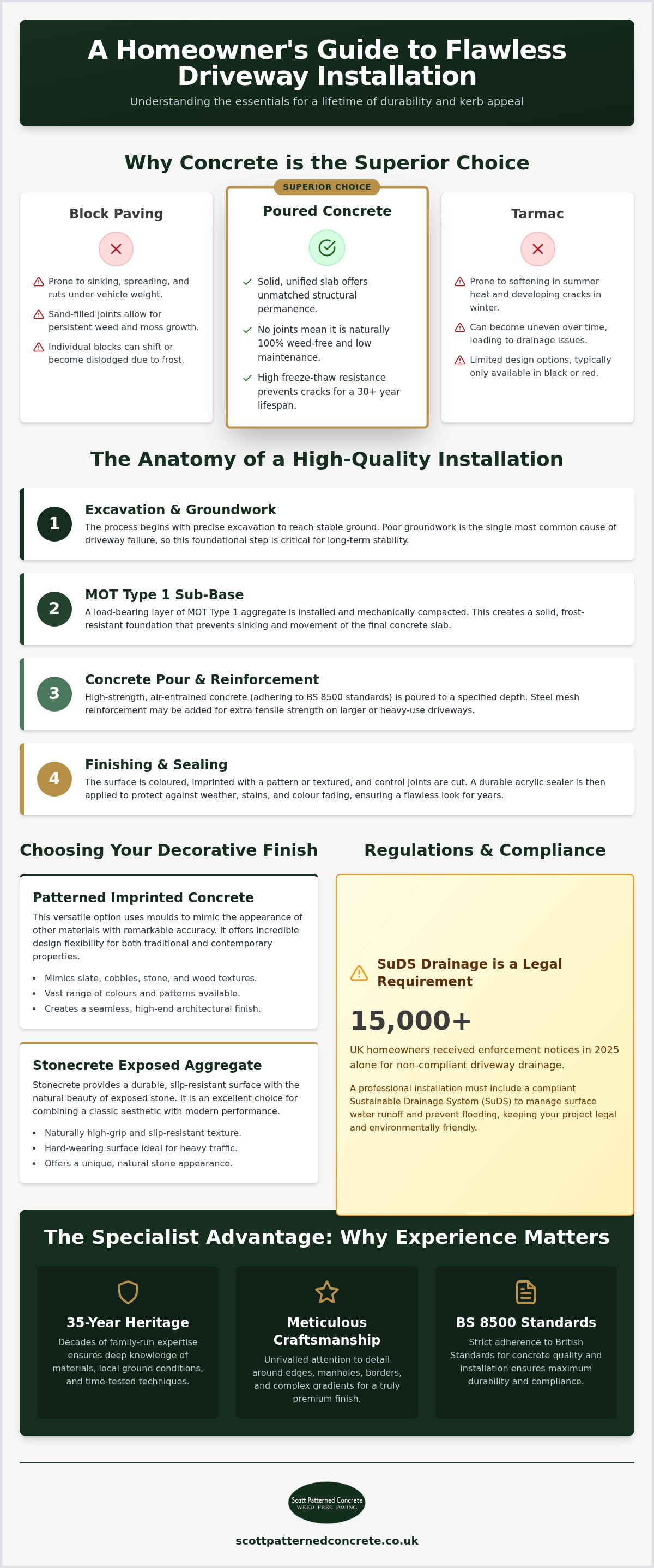
Did you know that in 2025 alone, more than 15,000 UK homeowners received enforcement notices for non-compliant driveway drainage? It’s a sobering figure that highlights why a successful domestic concrete driveway installation requires much more than just a smooth surface; it demands a rigorous adherence to current SuDS regulations and BS 8500 concrete standards. You probably want a front entrance that elevates your home's kerb appeal without the constant chore of weeding or the worry of seeing your investment sink after a heavy frost.
It's natural to feel overwhelmed by technical specifications or concerned about hiring the wrong team for the job. This guide will help you master the essentials of professional installation, from structural foundations to premium decorative finishes, ensuring your new surface remains flawless for decades. We'll walk you through the entire process, covering essential sub-base requirements and the rise of slip-resistant Stonecrete finishes, so you can approach your project with absolute clarity and the confidence that comes from thirty five years of family run expertise.
Key Takeaways
- Learn why the structural permanence of a single-pour concrete surface naturally prevents weed growth and seasonal movement for a lifetime of durability.
- Master the technical specifications of a domestic concrete driveway installation, ensuring you understand why the quality of the groundwork is just as vital as the final finish.
- Explore the differences between patterned imprinted concrete and Stonecrete exposed aggregate to select a decorative finish that complements your property's unique architecture.
- Gain a clear understanding of the 2026 SuDS regulations and the specific drainage solutions required to keep your project legally compliant and flood-resistant.
- Discover how the 35-year heritage of a family-run specialist ensures meticulous attention to detail around edges, manholes, and intricate borders.
Why Concrete is the Superior Choice for Domestic Driveway Installations
Selecting the right material for a domestic concrete driveway installation is a decision that influences your home's functionality and kerb appeal for decades. While block paving remains a common sight across the North East, it frequently suffers from individual units shifting, sinking, or spreading under the weight of modern vehicles. Tarmac, though initially cost-effective, is prone to softening in summer heat and can develop unsightly cracks during the winter months. Concrete provides a level of structural permanence that these alternatives cannot match. It creates a solid, unified slab that distributes vehicle weight evenly, effectively preventing the ruts and dips that often plague other surfaces. This stability is particularly important for larger driveways in areas like Stockton or Middlesbrough, where heavy usage is expected.
One of the most significant frustrations for UK homeowners is the relentless battle against weeds. Because concrete is a single-pour surface, there are no gaps or sand-filled joints where seeds can take root. This monolithic structure also eliminates the seasonal movement associated with smaller paving units. You won't find yourself re-levelling blocks or patching holes after a particularly harsh winter. When installed correctly by specialists with decades of experience, a concrete surface offers a lifespan often exceeding 30 years. It represents exceptional long-term value with minimal maintenance required, simply needing a periodic wash and reseal to maintain its "just-laid" appearance.
Durability Against the UK Climate
The British weather is notoriously fickle, placing immense pressure on external hardscaping. Concrete excels in these conditions due to its high freeze-thaw resistance. In the context of UK driveway standards, freeze-thaw resistance refers to the material's ability to withstand repeated cycles of water soaking into the surface, freezing, expanding, and then melting without the concrete scaling or cracking. To ensure this durability, we use specific concrete grades designed for external use. Professional sealing is equally vital; it acts as a protective barrier against road salts whilst locking in the vibrant colour of your chosen finish.
The Aesthetic Advantage: Beyond Plain Grey
Modern decorative concrete is a high-end architectural choice that offers incredible design flexibility. Whether you prefer the look of traditional slate, rustic cobbles, or natural stone, patterned concrete can be precision-moulded to mimic these textures with remarkable accuracy. This versatility allows us to tailor designs to suit both heritage cottages and sharp, contemporary builds. Managing water runoff is a key part of this design process, often incorporating Pervious Concrete and SuDS principles to ensure your new surface meets modern environmental standards. For inspiration on how to transform your home’s exterior, you can explore modern driveway design ideas to see how these finishes look in practice.
Technical Specifications: The Anatomy of a High-Quality Installation
A professional domestic concrete driveway installation is far more than a simple surface pour; it's a meticulously engineered, multi-layered system designed to withstand decades of use. At Scott Patterned Concrete, we approach every project with a "Master Craftsman" mindset, understanding that the visible finish is only as reliable as the groundwork hidden beneath it. Skipping steps in the foundation is the primary reason many driveways in the North East fail prematurely. By following rigorous technical standards, we ensure your investment remains structurally sound, regardless of whether you're parking a family hatchback or a heavy commercial vehicle. If you're unsure about the specific requirements for your property, you can always speak with our team for expert advice on your unique layout.
Excavation and Sub-base Standards
The process begins with precise excavation. We remove the existing surface and dig down to a depth that reaches naturally stable ground, typically ensuring enough room for both the sub-base and the concrete slab. Poor groundwork is the single most common cause of driveway failure in the UK, often leading to the sinking or cracking that homeowners rightfully fear. To prevent this, we install a minimum of 100mm of MOT Type 1 sub-base. This aggregate is then mechanically compacted using heavy-duty vibrating plates. This creates a non-yielding foundation that won't shift under pressure, providing the essential support needed for the concrete layers above.
Concrete Thickness and Strength for Domestic Use
For most residential properties, a concrete driveway thickness for cars of 100mm to 150mm is the industry standard. This depth provides the necessary flexural strength to handle daily traffic without distress. We often incorporate fibre reinforcement or steel mesh into the pour to enhance tensile strength and minimise the risk of shrinkage cracks. It's also vital to adhere to UK government guidance on driveway regulations regarding drainage and material standards to ensure your home remains compliant.
C35/45 concrete grade: This refers to a high-strength concrete mix where the "35" represents the cylinder strength and "45" represents the cube strength (measured in Newtons per square millimetre) after 28 days of curing. It's a durable, high-quality grade that offers superior resistance to the freeze-thaw cycles common in County Durham and North Yorkshire.
Even with the highest grade of concrete, expansion joints are a non-negotiable feature. These are strategic breaks placed amongst large pours to allow the slab to expand and contract naturally as temperatures change. Without these joints, the internal pressure within the concrete would eventually cause unsightly surface cracking. By calculating the exact placement of these joints, we protect the aesthetic integrity of your driveway whilst maintaining its structural permanence.
Choosing Your Finish: Patterned Imprinted Concrete vs. Stonecrete
A master craftsman views a driveway as more than just a place to park; it's a structural element that should harmonise with your home's unique architecture. When planning a domestic concrete driveway installation, the choice between patterned imprinted concrete and Stonecrete often depends on whether you want a traditional, textured look or a more contemporary, natural stone finish. Both options provide the structural permanence we've discussed, but they offer distinct visual and tactile experiences. We use specialised colour hardeners during the process to ensure deep, lasting tones that won't fade, creating a surface that looks as vibrant in a decade as it does on the day it’s laid.
The Versatility of Pattern Imprinted Concrete
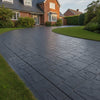
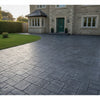
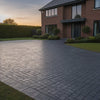
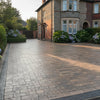
Patterned imprinted concrete is celebrated for its ability to mimic high-end materials like slate, brick, or cobble with incredible precision. By applying heavy-duty mats to the wet concrete, we create a seamless, weed-free surface that captures the charm of traditional paving without the structural weaknesses of loose blocks. Popular choices amongst our clients in Darlington and Yarm include:
- London Cobble: Ideal for heritage properties and period homes.
- Ashlar Slate: A sophisticated, large-format pattern that suits modern builds.
- European Fan: A decorative, sweeping design that adds a sense of grandeur.
This imprinting process ensures there are no gaps for weeds to penetrate. For a deeper look at the various textures and layouts available, our printed concrete guide provides extensive inspiration for your project.
Stonecrete: The Premium Exposed Aggregate Choice
If you prefer a more natural, understated aesthetic, Stonecrete offers a premium alternative to traditional patterns. This finish, often referred to as exposed aggregate, involves a specialised technique where the top layer of cement paste is carefully removed during the curing process. This reveals the beautiful natural stones and aggregates within the mix, creating a highly textured and slip-resistant surface that feels like solid stone underfoot.
Stonecrete is increasingly favoured for luxury landscapes and high-traffic domestic areas in places like Billingham and Hartlepool. It provides a rugged finish that is exceptionally durable and hides tyre marks effectively. Because the texture comes from the stones themselves rather than a stamped pattern, it offers a timeless quality that complements both contemporary architecture and rustic environments. Regardless of your choice, our 35 years of experience ensures that every edge is hand-finished and every drainage point is perfectly integrated into the design.
Regulations and Planning: SuDS, Drainage, and Legal Requirements
There is a persistent misconception that installing a concrete driveway is "illegal" or requires complex planning permission due to its non-permeable nature. In reality, a domestic concrete driveway installation is perfectly compliant with UK law, provided the surface water is managed correctly within your property's boundaries. The Sustainable Drainage Systems (SuDS) regulations were introduced to prevent urban flooding by ensuring that rainwater doesn't overwhelm public sewers. As experienced installers across Sunderland, Newcastle, and Redcar, we ensure that every project we undertake includes a bespoke drainage plan that satisfies these legal obligations whilst protecting your home from water damage.
The secret to a compliant and durable installation lies in the "falls" of the driveway. A master craftsman carefully calculates the levels to ensure that water naturally flows away from your house and towards a managed drainage point. If your driveway slopes towards the public road, you must have a system in place to catch that water before it leaves your land. We use a combination of subtle gradients and high-quality drainage hardware to keep your property dry and your installation fully within the law.
Achieving SuDS Compliance for Your New Driveway
To achieve SuDS compliance without the need for formal planning permission, we typically install discrete drainage channels, often called Aco drains, at strategic points. These channels collect surface runoff and redirect it into a soakaway or an existing storm drain located on your property. Under current UK rules, if your new driveway surface exceeds five square metres and you don't have a way to manage the water on-site, you will likely need to apply for planning permission. This process can be time-consuming and costly, which is why we prioritise "permitted development" designs that bypass these hurdles. We always advise homeowners to check UK government guidance on driveway regulations and their local authority guidelines in areas like County Durham, North Yorkshire, or Redcar before starting work, as specific regional requirements can occasionally vary.
Site Access and Utility Considerations
The logistics of a domestic concrete driveway installation require careful planning before the first shovel hits the ground. Concrete delivery involves large, heavy vehicles that need clear site access to ensure a continuous pour. Our team manages this process meticulously, ensuring that neighbours are informed and that the delivery doesn't cause local disruption. We also take great care to identify and protect underground services. Water pipes, gas lines, and electricity cables often sit just beneath the surface of old driveways; a master craftsman knows exactly how to excavate around these utilities without causing damage.
Finally, if you're creating a brand-new entrance or widening an existing one, you must consider the "dropped kerb" requirement. You cannot legally drive over a public footway to reach your new driveway without a formal crossing approved by your local council. This is a separate legal matter from the driveway itself but is essential for ensuring your new installation is fully accessible and legally sound.
Selecting a Specialist: Why Experience and Heritage Matter
Choosing the right partner for your domestic concrete driveway installation is just as critical as the materials used or the design selected. A driveway is a significant investment in your property's infrastructure, and it requires a level of precision that only comes from decades of hands-on experience. At Scott Patterned Concrete, we believe that a "Master Craftsman" approach is what separates a lifetime surface from a temporary fix. This mindset ensures meticulous detailing around complex areas such as manhole covers, curved borders, and property thresholds, where lesser installations often show their weaknesses. We manage the entire project from the initial site survey to the final application of high-grade sealant, providing a seamless service that prioritises your peace of mind.
It's tempting to opt for the lowest quote when comparing installers, but in the concreting industry, a cheap price often masks inadequate groundwork or inferior material grades. Cutting corners on the sub-base or using a lower-strength mix might save money today, but it inevitably leads to the high long-term costs of structural repairs or total replacement. We pride ourselves on straight-talking honesty; we'll never compromise on the technical standards required to ensure your driveway remains weed-free and structurally sound for the next thirty years.
The Scott Patterned Concrete Family Legacy
Sean Scott’s 35 years of industry experience serve as the hallmark of quality for every project we undertake. As a family-run business, our reputation is built on personal integrity and a deep-rooted commitment to high standards. Being a local specialist means we have an intimate understanding of regional soil types, such as the heavy clay often found across Stockton-on-Tees and Middlesbrough, and how the North East weather patterns affect curing times and durability. This local heritage allows us to act as a trusted partner for both domestic and large-scale commercial projects, ensuring every client receives the same level of expert care and technical proficiency.
Your Installation Journey: From Quote to Completion
We've designed our installation journey to be as transparent and stress-free as possible. It begins with a detailed consultation where we discuss your aesthetic preferences and functional needs, followed by a clear, no-obligation quote. We don't believe in high-pressure sales tactics; instead, we provide the information you need to make an informed decision with confidence. Throughout the process, you'll have the reassurance that your project is being managed by a team that takes personal responsibility for the final result, treating your home with the respect it deserves. We guide you through every stage, from the first excavation to the moment you park your car on your new, premium surface.
Ready to transform your home's exterior with a surface built to last? Contact Scott Patterned Concrete today for your free driveway consultation and expert advice from our family to yours.
Securing Your Home’s Kerb Appeal for the Decades Ahead
Investing in a new driveway is about more than just immediate kerb appeal; it's about structural engineering and long-term durability. By prioritising rigorous groundwork and adhering to the latest SuDS drainage standards, you ensure your domestic concrete driveway installation remains a permanent asset rather than a maintenance burden. Whether you choose the intricate textures of patterned concrete or the premium, natural feel of Stonecrete, the success of your project rests on the precision of the installation and the heritage of the craftsmen who carry out the work.
With over 35 years of industry experience, our family-run team is dedicated to delivering excellence across the North East, from Stockton to Sunderland. We combine technical proficiency with a personal commitment to quality, ensuring every edge and border is finished to the high standards our reputation is built upon. You don't have to navigate the complexities of drainage regulations or material choices alone when you have a master craftsman by your side.
We look forward to helping you create a functional, beautiful entrance that you can take pride in for years to come.
Frequently Asked Questions
Do I need planning permission for a concrete driveway in the UK?
You generally don't need planning permission if your driveway manages surface water within your property boundary. Under UK regulations, any new surface over five square metres must be permeable or have a managed drainage system like a soakaway. We design every project to meet these SuDS requirements, ensuring your installation remains a "permitted development" that bypasses the need for local council applications.
How long does a domestic concrete driveway installation take?
A typical domestic concrete driveway installation usually takes between seven and ten working days from the initial excavation to the final sealing. This timeframe allows for thorough groundwork preparation, the concrete pour itself, and the necessary curing time before the surface can be washed and sealed. Factors like the project's size and North East weather conditions can influence the exact duration of the work.
Will my concrete driveway crack over time?
Concrete is an incredibly durable material, but it requires strategic expansion joints to prevent unsightly surface cracking. These joints allow the slab to expand and contract naturally during the UK's temperature shifts. By using high-strength C35/45 mixes and correct reinforcement, we ensure the structural integrity remains intact. Cracking is almost always the result of poor groundwork or missing expansion joints rather than the material itself.
Is imprinted concrete slippery when wet?
Imprinted concrete is not inherently slippery because we incorporate specialised anti-slip additives into the final sealant. These micronised beads create a textured grip that provides excellent traction for both vehicles and pedestrians. Additionally, the patterns themselves, such as London Cobble or Ashlar Slate, provide natural ridges that further enhance slip resistance during wet weather in areas like Middlesbrough and Darlington.
Can I park my car on a new concrete driveway immediately?
You cannot park your car on a new driveway immediately; you should typically wait seven days for the concrete to gain sufficient strength. While you can usually walk on the surface after 24 to 48 hours, the weight of a vehicle can cause structural damage if the slab hasn't reached its required hardness. Following this curing period ensures your driveway remains flawless and prevents any early ruts from forming.
What is the difference between standard concrete and Stonecrete?
Standard concrete is a smooth, uniform surface often used for functional areas, whereas Stonecrete is a premium finish that reveals natural aggregates. During the Stonecrete process, we remove the top layer of cement to expose the beautiful stones within the mix. This creates a highly textured, slip-resistant, and aesthetically superior finish that is particularly popular for luxury residential projects across County Durham and North Yorkshire.
How much maintenance does a patterned concrete driveway require?
Patterned concrete is one of the lowest-maintenance surfaces available for UK homeowners. Because it's a single-pour slab, you won't have to deal with the constant weeding or re-sanding associated with block paving. To keep it looking its best, we recommend a simple power wash and a professional reseal every two to three years. This protects the colour and maintains the protective barrier against road salts and oils.
Can a concrete driveway be installed over an existing surface?
We strongly advise against installing concrete over an existing surface like old tarmac or paving. A high-quality installation relies on a fresh, mechanically compacted MOT Type 1 sub-base to prevent future sinking or cracking. Removing the old surface allows us to inspect the underlying ground and ensure the drainage falls are perfectly calculated, providing the structural permanence that has been our hallmark for over 35 years.